

Inappropriate Urination or Defecation Indoors
One of the most emotionally exhausting problems for dog owners is when their beloved pet starts urinating or defecating inside the house. Whether it’s a puppy in training, an anxious rescue dog, or an older pet suddenly forgetting its manners, this issue wears on the patience and confidence of even the most devoted pet parents.
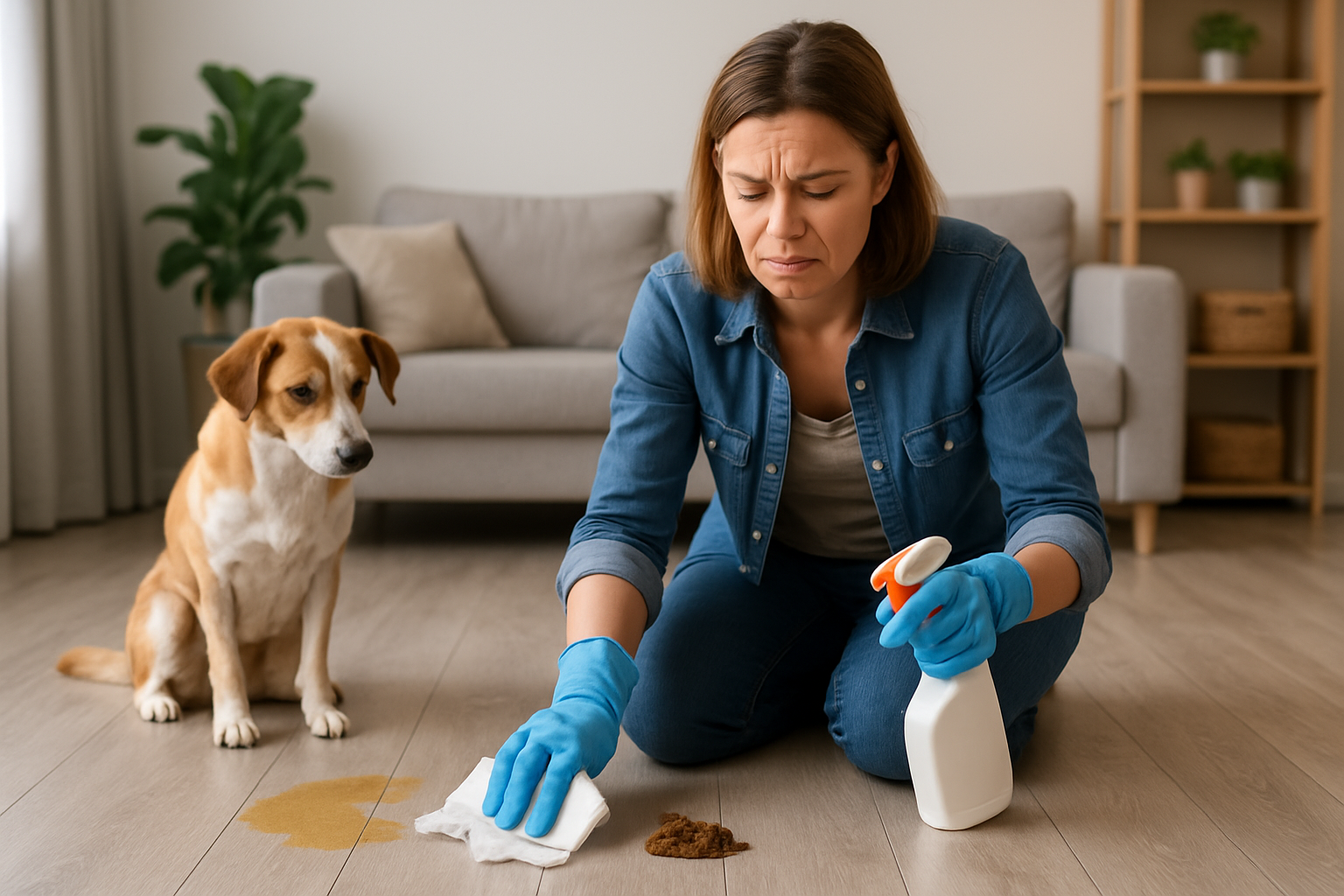
💔 Emotional Insight: What Dog Owners Go Through
One of the most emotionally exhausting problems for dog owners is when their beloved pet starts urinating or defecating inside the house. Whether it’s a puppy in training, an anxious rescue dog, or an older pet suddenly forgetting its manners, this issue wears on the patience and confidence of even the most devoted pet parents.
The emotional toll is real:
You may feel frustrated when your clean rug or couch gets soiled just after cleaning it.
You may feel helpless, especially when the accidents keep happening despite your efforts.
There’s a sense of embarrassment when visitors smell pet urine or see stains.
Some owners feel guilt after yelling or punishing their dog, realizing later it might have made things worse.
In worst-case scenarios, owners begin questioning if they’re cut out for dog ownership—a heartbreaking place to be.
But take a breath. This problem, while incredibly common, is usually fixable. Dogs don’t do this out of spite. They’re either confused, untrained, anxious, or dealing with something physical.
🔎 Root Cause Analysis: Why Is This Happening?
Let’s break down the most common reasons behind indoor accidents. Each root cause may require a different approach, so identifying the why is essential.
1. Incomplete or Inconsistent Training
The most common cause in puppies and newly adopted dogs. If a dog hasn’t been consistently trained or positively reinforced, they may not know where it’s acceptable to go.
2. Medical Issues
Dogs with urinary tract infections, bladder stones, diabetes, or kidney disease may urinate frequently or uncontrollably. Digestive problems can also cause sudden bowel accidents.
3. Anxiety or Stress
Dogs left alone too long or triggered by loud noises (like thunder or fireworks) may have anxiety-related accidents. Moving to a new home, changes in family structure, or new pets can also be triggers.
4. Territorial Marking
Especially in unneutered males, indoor urination can be a form of marking territory—different from needing to relieve themselves.
5. Age-Related Issues
Senior dogs may experience incontinence or forgetfulness due to canine cognitive dysfunction (doggy dementia), making them forget their training.
6. Submission or Excitement Urination
Some dogs urinate when they are excited or trying to show submission—especially when being greeted or disciplined.
7. Overuse of Puppy Pads
Training with pee pads for too long can confuse dogs into thinking it’s okay to go indoors. Transitioning from pads to outdoor pottying must be done correctly.
✅ Step-by-Step Practical Solutions: What You Can Do to Fix It
Before you begin:
If your dog is house-trained but suddenly starts having accidents, always visit a veterinarian first to rule out medical causes.
🛠 Step 1: Identify the Pattern
Keep a potty log for one week.
Note when and where the accidents happen (after eating? when you're gone? in the same spot?).
This helps determine whether the cause is physical, behavioral, or situational.
🐶 Step 2: Re-establish a Potty Training Routine
Take your dog outside frequently, especially:
After waking up
After eating or drinking
After play sessions
Before bedtime
Pick specific potty spots and always take them there.
Wait calmly and don’t rush. When they go outside, immediately reward with treats and enthusiastic praise.
Dogs learn best with positive reinforcement, not punishment.
📏 Step 3: Supervise Indoors or Use Crate Training
If you can’t watch them, use a crate or playpen. Dogs generally avoid soiling their sleeping area.
Gradually increase freedom as they prove trustworthy.
Always take them out immediately after crating.
🧼 Step 4: Deep Clean Soiled Areas
Use an enzyme-based cleaner to remove all urine scent. Regular cleaners won’t break down the proteins in urine, and the scent might invite repeat accidents.
Dogs are heavily scent-driven. If they smell a previous spot, they’re likely to go again.
🧠 Step 5: Address Behavioral Causes
If your dog pees when excited or scared, avoid direct eye contact or towering over them.
Use a calm voice when greeting.
Build your dog’s confidence through training and affection—not scolding.
🧬 Step 6: Spay or Neuter
If your dog is marking inside (lifting leg against furniture, walls), spaying/neutering can significantly reduce this behavior.
Training is still needed, but hormones play a major role in marking.
🐕 Step 7: For Seniors or Medical Cases
For older dogs, doggy diapers or washable belly bands can help manage symptoms while you work with your vet.
Increase potty breaks for senior dogs, and offer easier access to doors.
🧩 Quick Fixes for Busy Owners (But Still Effective)
Limit Water Access right before bedtime (but don’t restrict it completely).
Use baby gates to keep your dog confined to easy-to-clean areas when you’re not home.
Install a doggy door if you have a secure yard and a predictable schedule.
Consider hiring a dog walker or using doggy daycare if accidents happen while you’re away for long hours.
Set up a camera to monitor behavior when you're not home—it can offer clues about triggers or timing.
🌟 Final Thoughts: Hope Is Not Lost
Dealing with indoor potty accidents is discouraging—but with time, consistency, and understanding, the vast majority of dogs can be successfully retrained. Try to see it not as defiance but as communication. Your dog is telling you something—either they’re confused, uncomfortable, unwell, or scared.
Stay calm. Punishment creates fear, not learning. Instead, give them every chance to succeed, praise them when they do, and address any underlying causes—be they emotional, medical, or training-related.
Remember: you're not a failure for struggling with this issue. Millions of dog owners have been where you are—and come out the other side with happy, well-trained pets and clean homes.
