


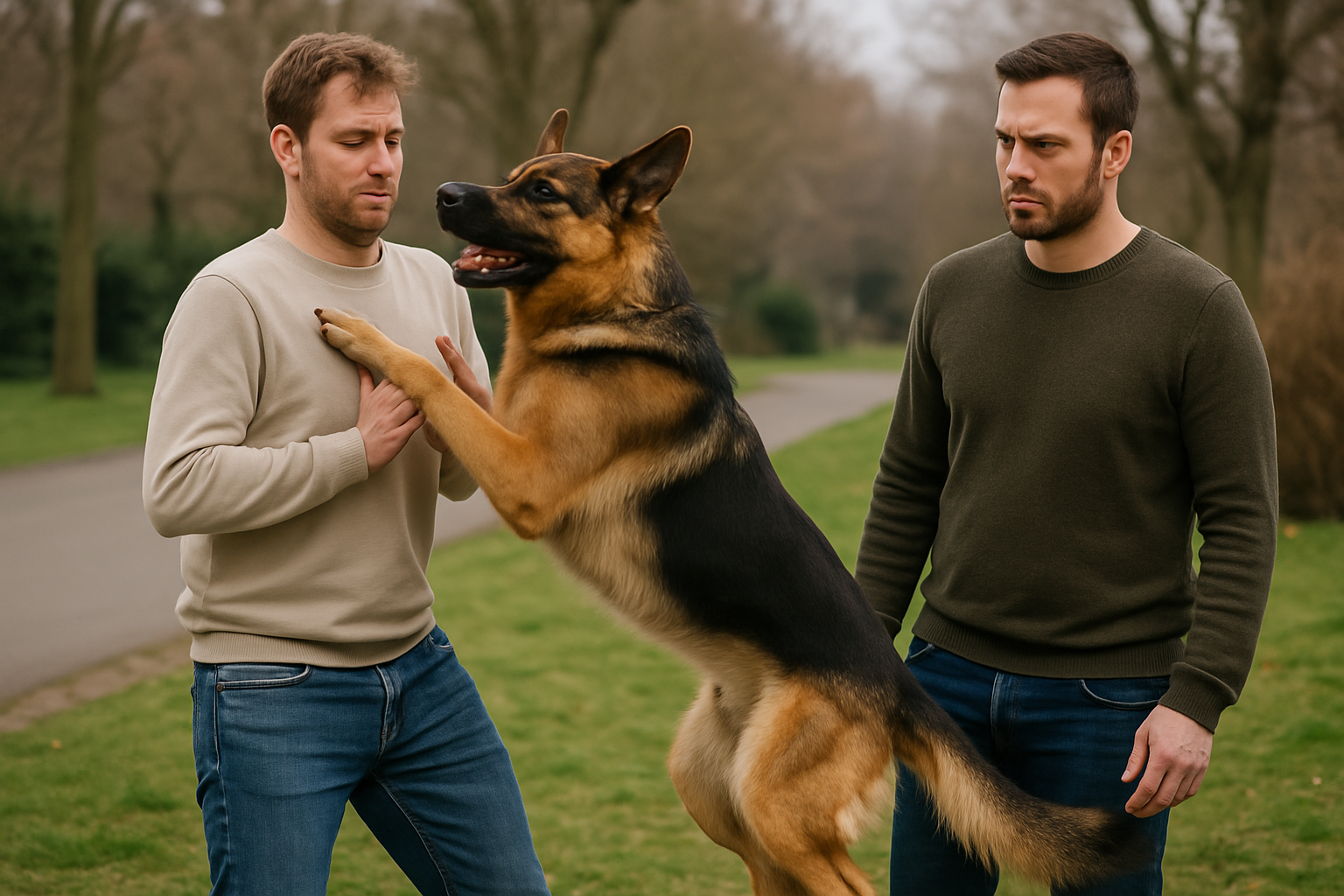
At first, a dog jumping up to greet you can feel adorable—especially when they’re puppies. But as they grow older and bigger, it quickly turns into a frustrating and embarrassing behavior.
Why Dogs Jump, What Owners Feel, and How to Stop It Without Breaking Their Spirit
💔 Emotional Insight: What Dog Owners Feel
At first, a dog jumping up to greet you can feel adorable—especially when they’re puppies. But as they grow older and bigger, it quickly turns into a frustrating and embarrassing behavior.
Dog owners often express emotions such as:
😤 Frustration: “I’ve told him a hundred times—he just doesn’t get it!”
😳 Embarrassment: When guests arrive and are met with muddy paws, slobber, or a full-body tackle.
😞 Helplessness: Feeling like every effort to correct the behavior fails.
😠 Annoyance: Especially when the dog jumps on children, seniors, or strangers.
💔 Guilt: Worrying that correcting the behavior may make the dog feel unloved or rejected.
The reality is, dogs don’t jump to be bad. They’re doing it because they’re excited, want attention, or haven’t learned better. But when left unaddressed, it can become dangerous—especially with larger breeds.
🔍 Root Cause Analysis: Why Dogs Jump on People
To change the behavior, it’s important to understand why your dog is doing it.
Here are the most common reasons:
1. Excitement and Overstimulation
Dogs, especially young ones, often have big bursts of excitement. Jumping is a physical way they show joy.
2. Attention-Seeking
Dogs quickly learn that jumping usually results in attention—positive or negative. Even being yelled at can be reinforcing.
3. Greeting Behavior
In the wild or among themselves, dogs greet each other by sniffing faces. Jumping is a dog’s way of getting closer to your face.
4. Inconsistent Training
If some people allow jumping (“He’s just being friendly!”) and others don’t, the dog becomes confused about what's okay.
5. Lack of Impulse Control
Jumping can be part of an overall lack of self-regulation, especially in high-energy or undertrained dogs.
✅ Step-by-Step Practical Solutions
Let’s break down a proven method to eliminate jumping without damaging your bond with your dog.
🛠 Step 1: Stop Reinforcing the Behavior (Even Accidentally)
Every time you give attention—eye contact, touching, yelling, laughing—you’re rewarding the jumping.
What to do:
When your dog jumps, turn away immediately.
No eye contact, no speaking, no touching.
Wait until all four paws are on the ground.
Then calmly give praise or a treat.
This teaches your dog that only calm greetings get attention.
🧠 Step 2: Train an Incompatible Behavior (Sit Instead)
You can’t sit and jump at the same time—so teach your dog that “sit” is how they get love.
Training steps:
As someone approaches, cue “sit” before your dog has a chance to jump.
The moment they sit, reward with a treat or affection.
Practice with different people, in various settings.
Bonus tip: Get friends or family to help with “door drills,” where they enter repeatedly, and your dog only gets greeted when sitting.
✋ Step 3: Use a Leash for Better Control During Training
Keep your dog on a short leash when expecting guests.
Step on the leash so they physically can’t jump.
Reinforce calm behavior with treats or praise.
Over time, the leash becomes unnecessary as they build better habits.
👥 Step 4: Teach Guests and Family the Rules
This is critical. If some people allow jumping, your dog will stay confused.
Set household and visitor rules:
No petting unless the dog is sitting.
No roughhousing near entrances.
Use consistent commands like “Off” or “Sit.”
Dogs need a clear, consistent message to understand what behavior is expected.
🎯 Step 5: Reward Calm, Not Just Obedient, Behavior
Don’t only correct jumping—actively praise calm behavior.
If your dog lies down quietly as someone enters, reward it.
Use treats or a calm “good dog” voice.
This teaches them that relaxed behavior is valuable.
🚫 What Not to Do
❌ Don’t knee your dog in the chest—it can cause injury and fear.
❌ Don’t shout “Down!” repeatedly while letting the behavior continue.
❌ Don’t push the dog away—it can feel like play and encourage more jumping.
❌ Don’t use shock collars—they can create fear without teaching alternatives.
🧩 Quick Fixes You Can Try Right Now
Hang a small treat pouch by the door. Use it when you walk in—only reward sits.
Teach a “place” command (like going to a mat or dog bed) when people enter.
Keep a favorite toy near the entrance. Toss it as someone enters to distract.
Use baby gates to prevent direct access to the door until calm behavior is achieved.
🐶 Special Case: Jumping on Kids or Seniors
Dogs often see kids as equals and get especially excitable.
Use leash control around children until your dog reliably stays down.
Teach children to stand still and turn away when the dog jumps—no screaming or running (it excites the dog more).
🌟 Final Thoughts: Jumping Is a Communication Problem, Not Disobedience
Your dog isn’t trying to dominate you or disobey. They're excited, affectionate, and don’t yet know the right way to show it.
By consistently ignoring the jumping, rewarding calm greetings, and using a few simple training techniques, you can transform this behavior completely—and restore peace in your home.
Consistency, calm energy, and clear expectations are all it takes.
